Most investors size up a property by working out the yield. Rent divided by price, times a hundred. It’s a quick, useful first check. But it doesn’t actually tell you whether a deal is good for you.
Here’s why. Yield ignores the one thing that usually matters most: how much of your own money is actually tied up in the deal, and what that money is earning you.
That’s what Return on Capital Employed is for. It sounds technical, but the idea is simple. Don’t measure your return against the whole value of the property. Measure it against the actual cash you put in.
If you buy with cash, those two numbers are the same. If you use a mortgage, which most of us do, they can be very different. And that gap is where a lot of the real thinking happens.
Let’s work through an example. By the way, don’t get hung up on the exact figures – I just want to show you the principle.
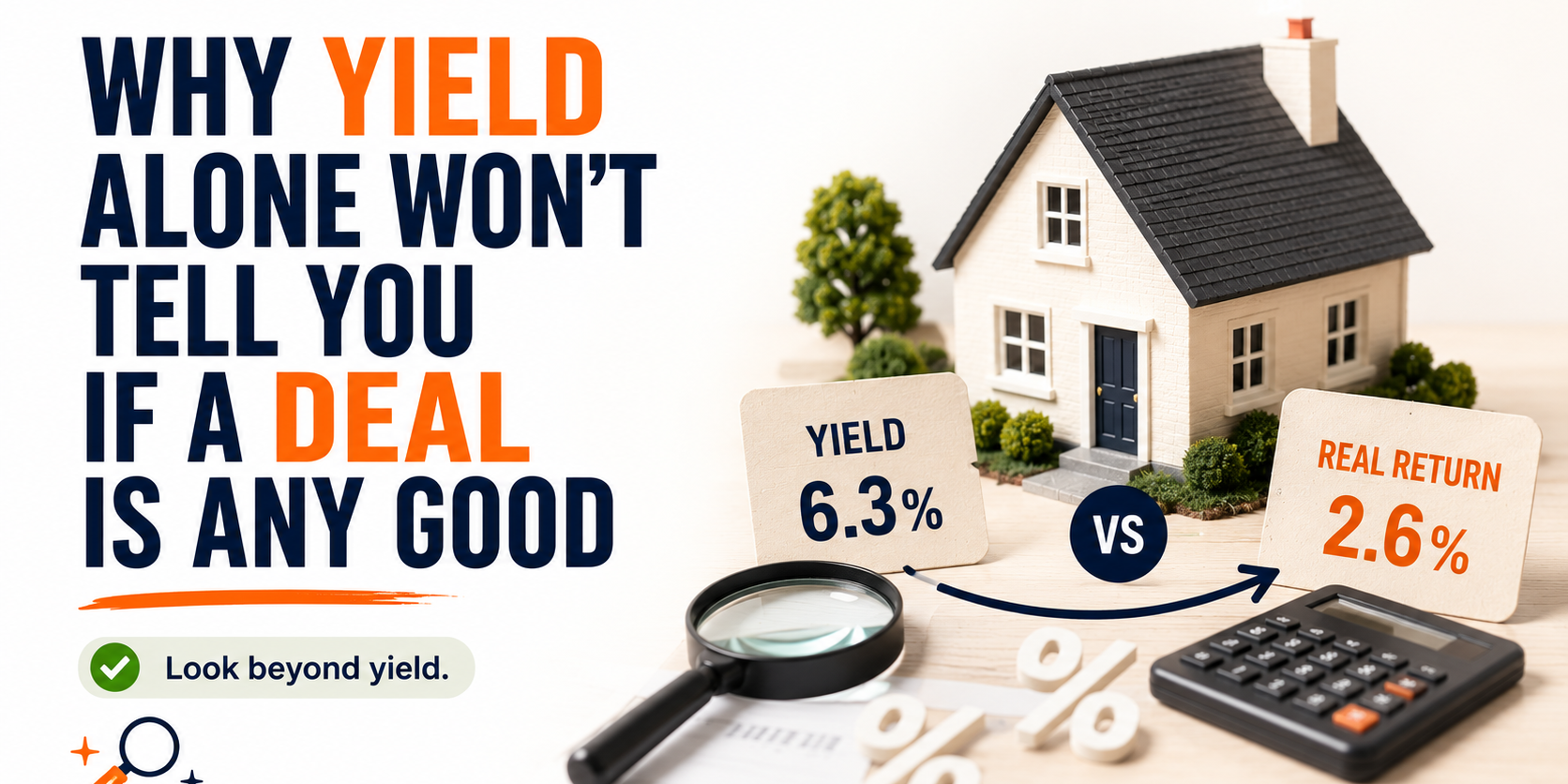
Say you buy a property for £180,000. It rents for £950 a month, so £11,400 a year. Rent divided by price gives you a yield of 6.3%. Looks decent.
Now bring the mortgage into it. Say you borrow three quarters of the price and put down the rest as your deposit. That’s a £135,000 mortgage and a £45,000 deposit. Add Stamp Duty, which is currently 5% extra for most investors buying an additional property, and that’s another £9,000. Add legal fees, a survey, and a mortgage fee, call it £2,000. So the real amount of your own money going into this deal isn’t £45,000. It’s closer to £56,000.
Next, work out what’s actually left over each year once you’ve paid the mortgage and the running costs. On that £135,000 mortgage, at around 5.4%, you’d pay roughly £7,290 a year in interest. Take off a letting agent’s fee, insurance, and a bit set aside for repairs and empty periods between tenants, and your costs come to roughly £9,960 a year. Against rent of £11,400, that leaves you with about £1,440 a year in your pocket.
Now here’s the bit most people skip. Divide that £1,440 by the £56,000 you actually put in. That’s your real return: 2.6%.
Compare that to the 6.3% yield you started with. Quite a difference, isn’t it? And it’s the 2.6% that actually tells you something useful. For every pound of your own money sitting in this deal, you’re getting about two and a half pence back each year, before any rise in the property’s value. You could get close to that from a savings account, without the hassle, the risk, or having your money locked away in bricks and mortar.
This makes a bigger difference now than it used to
A few years back, when mortgage rates were near enough zero, this sum barely mattered. Finance was cheap, house prices were rising fast, and a poor return like this could still feel fine because the property’s value was doing the work instead. These days, with mortgage rates sitting around the mid-5% mark, that cushion has mostly gone. A deal that used to coast along on a low return is now a deal where you’re working hard for very little. And one bad month, an empty property or an unexpected repair, can wipe out the whole year’s return.
What actually moves the number
The good news is this figure isn’t fixed. A few things shift it, and it helps to know what they are.
Knocking the price down helps more than you’d think, because it shrinks both your deposit and your Stamp Duty at the same time. Push that £180,000 property down to £165,000, and your cash in drops from £56,000 to around £51,500. Same rent, same running costs, and your return climbs from 2.6% to roughly 2.8%. Not a huge jump on its own, but it’s one of several things you can pull on, not the only one.
Putting less deposit down can help too, but it isn’t automatically better. Borrow more, and your mortgage payments go up as well. Take that same property at 80% borrowing instead of 75%. Your deposit falls to £36,000 and your total cash in to about £47,000. But the mortgage itself grows, adding roughly £486 more a year in interest, and your yearly profit falls to about £954. Work it through and the return actually ends up lower, around 2%, not higher. Borrowing more only helps if what you’re paying in interest is less than what you’re getting back in rent. It isn’t a free lunch.
What to actually do with this
Before you commit to a property, work out both numbers. Yield gives you a quick first look. Your real return tells you whether it’s actually worth your money, given how you’re planning to pay for it.
A property with an ordinary yield but a strong real return, maybe because you bought it below market value, or did some cheap, sensible work to it, can easily beat a flashier-looking high-yield property bought at full price with a big mortgage.
Try it on the next few properties you look at. You might find you’ve been walking past some good deals, and getting excited about some average ones, just because you were only looking at the one number.
Here’s to successful property investing.

Peter Jones
Author, property investor and ex-Chartered Surveyor
 PS. By the way, if you’d like a deeper dive into property investing based on the real-life experience of an investor who has built a substantial multi-property portfolio, my popular e-book, The Successful Property Investor’s Strategy Workshop, explains how I built my own portfolio from scratch and the principles that can help you do the same.
For more details please click here: https://thepropertyteacher.co.uk/the-successful-property-investors-strategy-workshop