I still see this one from time to time.
An investor buys a property they like — or in an area they know — and then acts surprised when it takes weeks to find a tenant. Or when the only enquiries are from people who do not earn enough to afford the rent. Or when they are forced to cut the rent just to get someone through the door.
It is a classic mistake. And I understand it — many of us have done it, myself included.
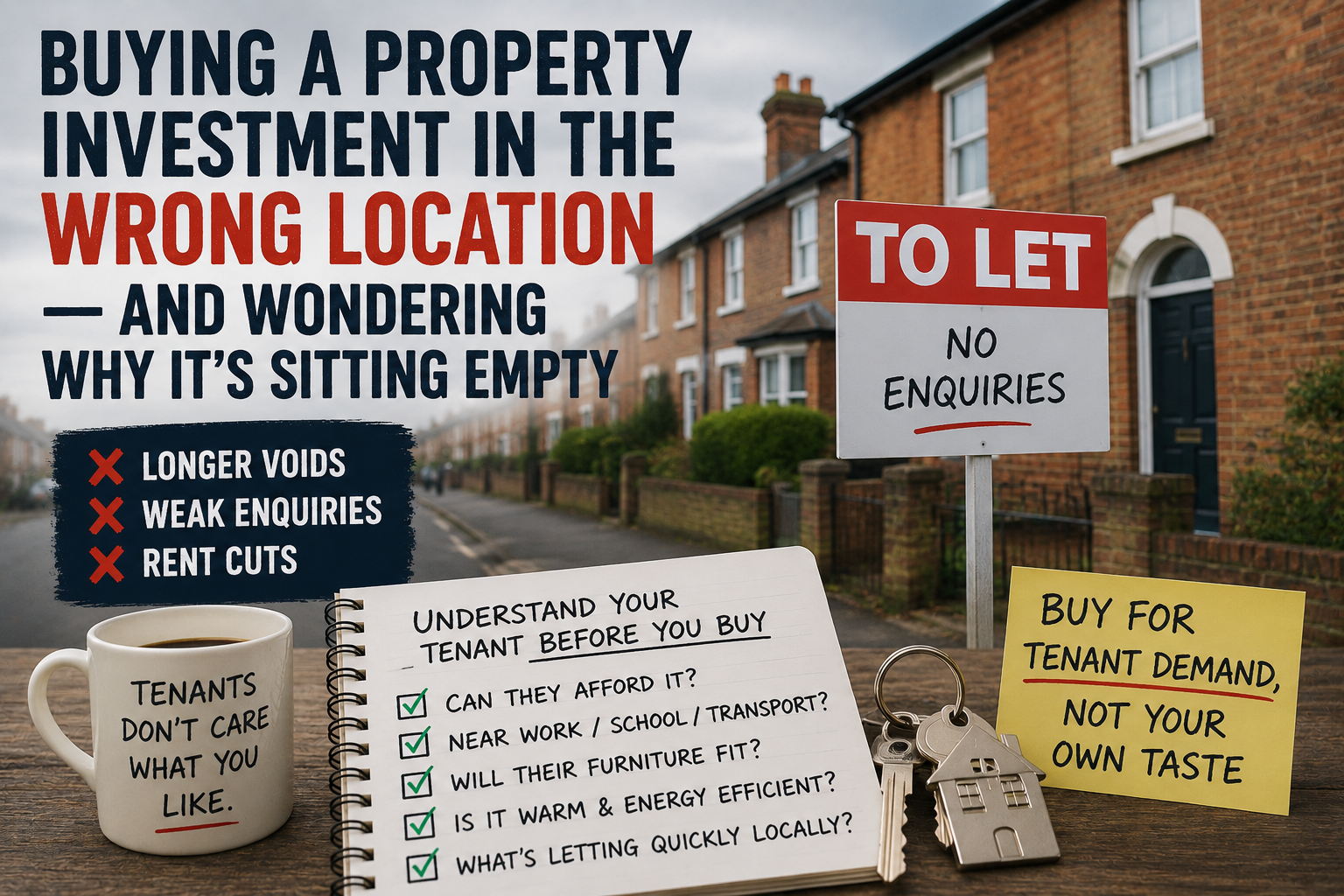
But here is the thing: your tenant does not care what you like.
They do not care that you grew up in the area. Or that the garden faces south. Or that you “would happily live there yourself”.
In fact, the more you like a property personally, the more suspicious you should be of your motives for buying it.
You Are Not the Customer
This is where many investors go wrong.
They look at the deal from their own perspective instead of thinking about the person who is going to pay the rent every month.
Big mistake.
Tenants think in terms of:
- Can I afford it?
- Is it near work, school or transport?
- Will my furniture fit, if you are letting unfurnished?
- Is it warm in winter?
They are not thinking about character features or whether the paint matches the kitchen tiles. And they definitely are not paying more because the estate agent described the garden as “sun-drenched”.
If you do not understand your likely tenant — who they are, what they want, and what they will pay for — you are flying blind.
How to Fix It Before You Buy
The best way to understand tenant demand is not a spreadsheet or some fancy AI model.
It is a five-minute chat with a local letting agent. Preferably at least three chats with three different local letting agents who deal with that type of property in that locality.
Ask them:
- What is letting quickly?
- What is not?
- What rent levels move fastest?
- Are tenants mostly families, couples, students or sharers?
- What do they want in a rental?
You will learn more from three phone calls than from a whole afternoon scrolling Rightmove.
You will learn even more if you go in and meet them face to face.
Then, once you have got that local insight, use online tools such as PropertyData or Zoopla to check the numbers stack up — but do not rely on them alone.
Online tools show you what is listed. Letting agents know what is actually letting.
A Real-Life Example
Back in the early 2000s, there was a run of smart new-builds along the Thames — places like Kingston, Barnes and Thames Ditton.
Nice homes. Great build quality. Decent access to London. Investors thought, “Perfect for families.”
And then… nothing. They sat empty.
The rent needed to cover the mortgage was £1,500 to £2,000 a month. Trouble is, there just were not many families who could — or would — pay that to rent in those areas. Meanwhile, the more modest two-bed flats nearby were renting like hot cakes.
Different decade, same problem: investing in what looks good rather than what works.
What’s Different Today?
In today’s market, tenants are even more value-conscious.
High energy bills, stricter EPC rules, and shifting job markets mean tenants care as much about running costs as they do about rent.
That £800-a-month flat with poor insulation might be a harder sell than a slightly smaller one that is warm, efficient and walkable to work.
So yes, use the data — but do not forget to sense-check everything against what is actually happening on the ground.
The Bottom Line
A good property in the wrong place is still a bad investment.
And a great location with the wrong type of property? Just as bad.
That is true no matter how cheaply you manage to buy it.
So here is the takeaway: buy for tenant demand, not for your own taste.
Do your homework. Talk to agents. Understand your tenant before you buy — not after.
Because no matter how lovely the garden is, if no one wants to live there, it is not going to make you any money.
Here’s to successful property investing.

Peter Jones
Author, property investor and ex-Chartered Surveyor
 PS. By the way, if you’d like a deeper dive into property investing based on the real-life experience of an investor who has built a substantial multi-property portfolio, my popular e-book, The Successful Property Investor’s Strategy Workshop, explains how I built my own portfolio from scratch and the principles that can help you do the same.
For more details please click here: https://thepropertyteacher.co.uk/the-successful-property-investors-strategy-workshop